A tankless water heater does not store hot water at all. It waits for a faucet to open, senses the flow, fires a burner or energizes its elements, and heats water as it races through a compact heat exchanger. That on-demand design is a big part of its appeal, but it packs a lot of sensors and controls into one small cabinet, and every one of them has to agree before you get hot water. When one of them objects, the unit shuts down and posts an error code. In Saginaw, MI, the usual culprits are mineral scale coating the heat exchanger, a flow sensor that no longer registers demand, an igniter or flame rod that cannot prove the flame, and venting or gas supply problems that trip the unit's safety limits.
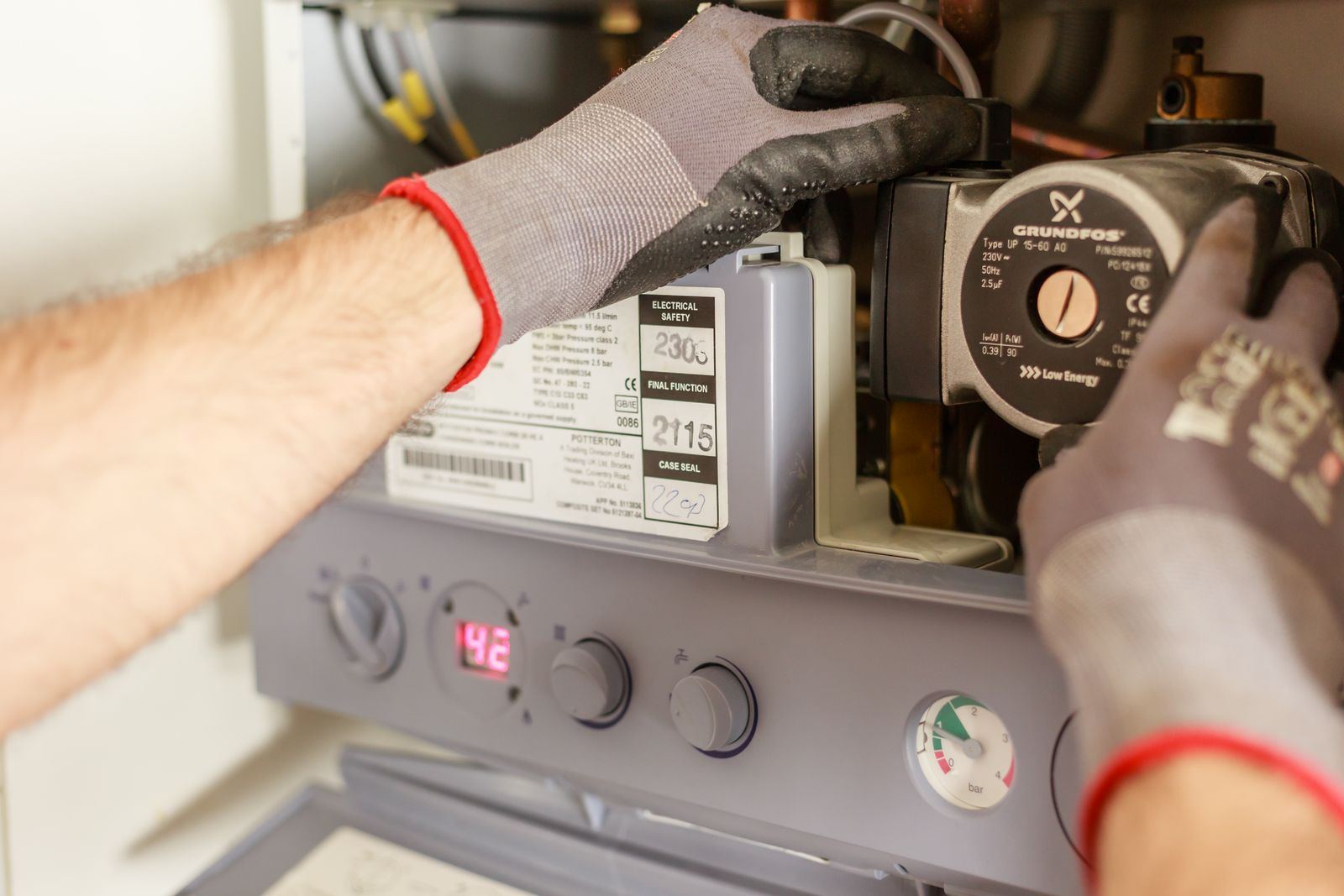
Error codes are a starting point, not a verdict, and we treat them that way on every Saginaw call. The same ignition failure code can come from a worn igniter, a fouled flame rod, a gas line too small to feed the burner at full fire, or an air intake clogged with lint. That is why Saginaw Water Heater tests before replacing anything. Our technicians read the fault history stored in the control board, watch flow sensor output with a faucet open, measure flame signal and igniter resistance, and put a manometer on the gas inlet to see what pressure actually reaches the valve when the burner is running flat out. We also compare inlet and outlet temperatures against the flow rate, which exposes a scaled heat exchanger long before it fails outright.
We work on tankless heaters from Rinnai, Navien, Noritz, Rheem, Takagi, and the other major brands, gas-fired and electric alike. The fix depends on the diagnosis: a full descaling flush through the isolation valves when scale is choking the heat exchanger, a new flow sensor when the unit no longer notices a faucet opening, a fresh igniter or cleaned flame rod when ignition keeps failing, or a vent correction when the unit trips on combustion air. Sometimes the answer is bigger. A gas line undersized for the unit's full firing rate has to be upsized, and a heat exchanger cracked by years of scale may make replacement the smarter call on an older unit. We lay out every option honestly before any money is spent. Call (989) 208-3612 and a technician will be on the way.
Most of our service calls are for Water Heater Repair in Saginaw. Start there if you're not sure what you need.
When to Call for Tankless Water Heater Repair
Catching a symptom early is often the difference between a quick part swap and a tank that gives out on the garage floor. Here are the most common indicators that it's time to call a professional:
- Cold slugs in the middle of hot water that last longer than before
- No hot water at a low-flow faucet even though the shower works fine
- Water dripping from the cabinet or the condensate line
- Water that swings between hot and lukewarm in the middle of a shower
- Repeated ignition attempts, then a shutdown
- Lukewarm water whenever two fixtures run at the same time
- New whistling, roaring, or rumbling from the unit
- An error code flashing on the unit's display
Early Action Saves Money
A worn-out anode rod, a sediment-choked tank, or a weak thermocouple rarely fixes itself, and the repair usually costs more the longer it waits. If you notice any of these signs, contact Saginaw Water Heater at (989) 208-3612 for a prompt inspection.
Need Help With Tankless Water Heater Repair?
We'll diagnose the problem and give you a straight answer on the fix.
Call (989) 208-3612 NowTankless Water Heater Repair FAQ
Why Professional Tankless Water Heater Repair Matters
From the outside a tankless heater looks like a plain box; inside, it is a tightly controlled system. One fault code often has several possible causes, and the sensors, igniters, and control boards involved are not cheap to buy on a hunch. Gas models add real hazards: the burner can fire at close to 200,000 BTU per hour, the vent carries combustion gases that contain carbon monoxide, and a loose gas connection or a vent joint that separates can put fuel or exhaust into the living space. Electric models bring a different hazard, often drawing well over 100 amps across several 240-volt circuits, so a loose lug or undersized wire can overheat quickly.
Professional service is usually the cheaper path, too. Our technicians do not guess at error codes. They test flow sensors under real flow, measure flame rod signal, confirm igniter resistance, read inlet gas pressure at full fire, and check the vent from end to end. When scale is the problem, we flush it out properly and rinse the system before the unit goes back in service. And because some tankless problems, like an undersized gas line or a cracked heat exchanger, are not solved by parts at all, we tell you so directly, before you commit to anything.
Our Tankless Water Heater Repair Process
We follow the same careful process on every water heater, whether it's a quick thermostat swap or a full tankless conversion. Here's what you can expect when you choose Saginaw Water Heater:
Code & Fault History Review
A code points us in a direction, and testing finishes the job. Flow sensor output, flame signal, igniter resistance, inlet gas pressure, and vent condition all get checked before any part is replaced.
Honest Answers & Upfront Price
You see what failed and hear why, then get a firm price before work begins. If scale has cracked the heat exchanger or the unit is near the end of its life, we say so plainly.
Repair & Descaling
Most tankless repairs are finished in one trip: a descaling flush, a new flow sensor, igniter, or flame rod, a cleaned inlet screen, or a corrected vent connection.
Verified Temperature Rise
We never assume a fix worked. We test the unit at low flow and at full demand, confirm a steady outlet temperature, and verify that the code is cleared and stays cleared.
Prevention Tips That Actually Help
Most of the failures we see could have been delayed for years with basic upkeep. Put these technician-approved steps to work at home:
- Leave the power on in cold weather, since freeze protection only runs when the unit has electricity
- Keep the vent termination and air intake clear of leaves, nests, snow, and lint
- Flush scale out of the heat exchanger annually, and sooner in hard water
- Get the supply line checked before adding gas appliances, which can starve a tankless unit
- Protect the heat exchanger with a softener or scale inhibitor when your water is hard
- Clean the inlet water filter screen a few times a year so the flow sensor gets full flow
- Do not keep resetting a recurring code; note it and have it checked
Comparing DIY and Professional Work
A few tasks, like checking the temperature setting or lifting the relief valve lever to test it, are fine for homeowners, but most water heater work involves gas lines, venting, 240-volt circuits, or a tank full of scalding water, and that belongs with a professional. Here's how the two approaches stack up:
| Consideration | Doing It Yourself | Hiring a Pro |
|---|---|---|
| Reading the Code | Trial and error based on the manual | Each suspect part tested with a meter |
| Descaling | Vinegar poured in without proper valves | Full descale, then a thorough rinse |
| Combustion Safety | Gas pressure and vent joints unchecked | Gas pressure and vent run verified |
| Electrical Work | Live wiring inside the cabinet | Power verified off, board handled correctly |
| Parts | Generic parts that may not fit the model | Right part, installed once |
| Outcome | Symptom patched, cause remains | Lasting repair, confirmed by testing |
Book a Visit Today
The sooner you call, the sooner the hot water is back. Reach Saginaw Water Heater for fast service.
Get Help: (989) 208-3612Where We Provide Tankless Water Heater Repair
We serve Saginaw and its neighboring towns for tankless water heater repair, from quick same-day repairs to planned installs.